Sewickley, Pennsylvania
Nathan St.Germain (AIA, CPHC, RESET® Air AP) founded Studio St.Germain to create both sustainable and aesthetically-pleasing architecture. We catch up with him and 3D modeling specialist Benjamin Nahum (Assoc. AIA, CPHC) on how they articulate this philosophy in everyday practice.
400 Beaver. Image courtesy of Studio St.Germain.
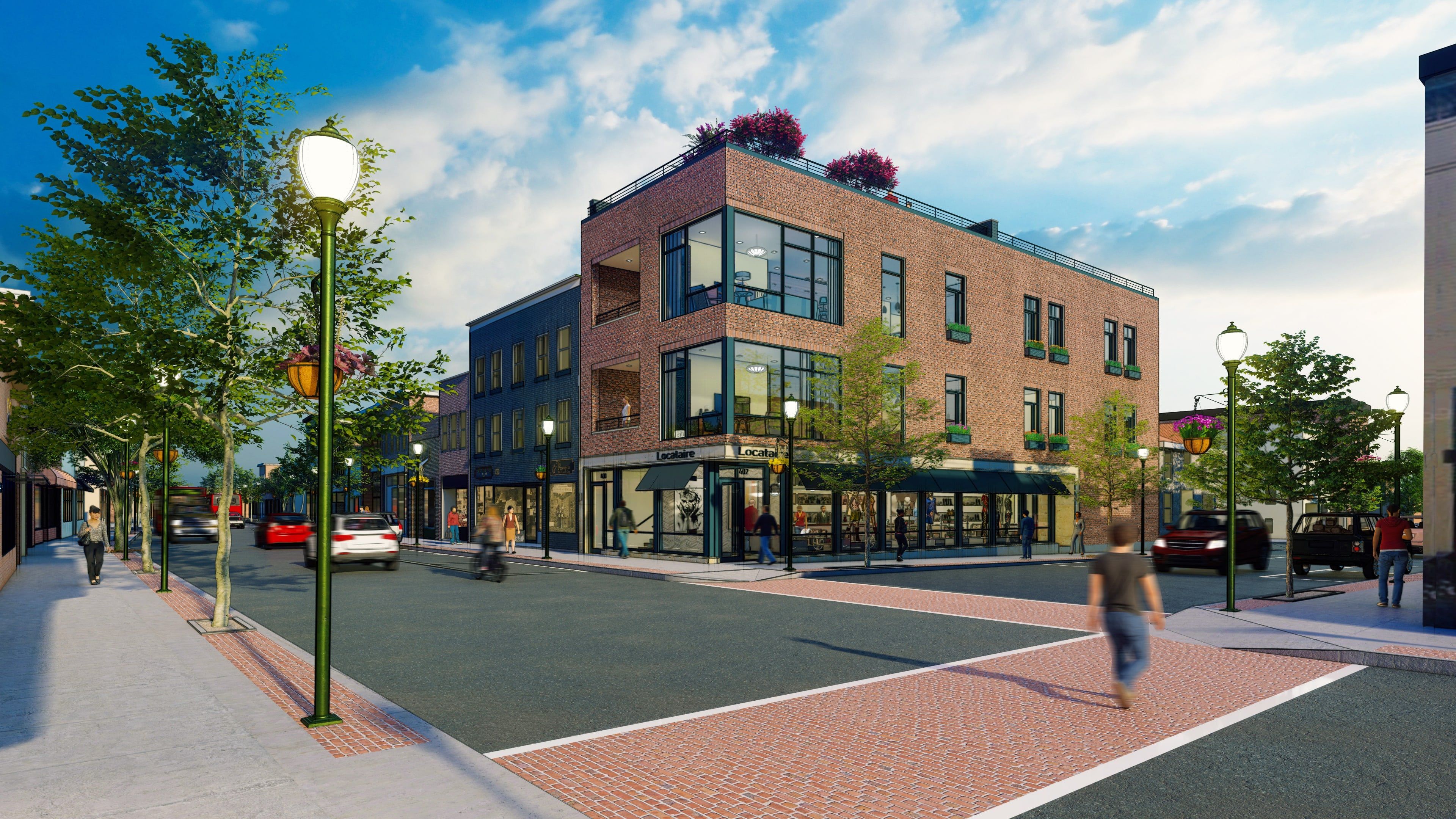
Tell me a bit about yourself, your role at Studio St.Germain, and how you got into designing in 3D.
Nathan:After graduating from the New Jersey Institute of Technology, I spent over a decade practicing in New York City. After working on a variety of projects in various locations—including Calgary, Colorado, and San Diego—I moved to Pittsburgh and took a position with a building science company. By the time I got to Pittsburgh, I had already been exposed to progressive architectural principles, and I began formulating my vision of combining sustainability with aesthetics and wellness. In 2014, when I was based in Sewickley, I established Studio St. Germain, focusing on high-performance buildings. Eight years later, Studio St. Germain is one of the leaders in high-performance architecture in the Pittsburgh Metro region. Last year, our Sewickley Tavern project won a Certificate of Merit from the AIA Design Awards.
Ben:I’ve always been interested in energy modeling and high-performance buildings and had a knack for building science. Like Nathan, I’m a Certified Passive House Consultant (CPHC) for passive house design. My specialty is in 3D modeling.
400 Beaver, High-Performance Design. Image courtesy of Studio St.Germain.
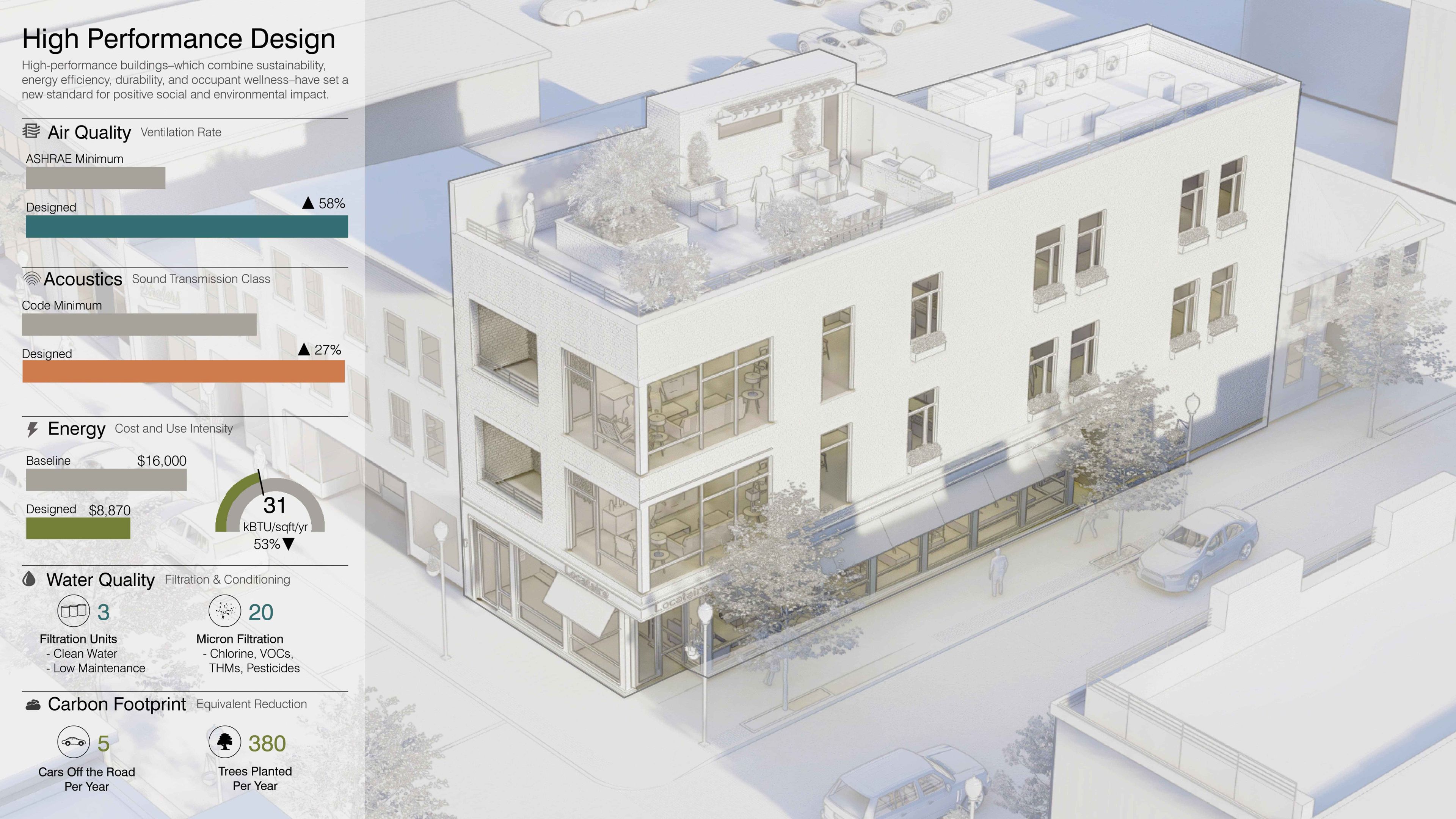
How do you define high-performance buildings?
Nathan:
“A high-performance building, in my mind, is a carefully calibrated environment where design, sustainability, performance, and productivity intersect.”- Nathan St.Germain, Principal
We are asked this question by clients all the time. Before we can answer it, we often need to educate people about what we do for sustainability and high-performance building so they can understand what we are designing.
How do you use technology in your projects, and how does it differentiate the studio from other architecture firms?
Nathan:We integrate Sefaira into the early conceptual design process as an iterative tool to help shape both the aesthetic and the building performance. Once we know preliminary HVAC systems information, we test different building performance strategies to get an early baseline. We track specific metrics to see where we are relative to our original goals and if we are hitting those goals. If not, we make adjustments, and if so, we continue elaborating on the design. Early iterations help us communicate preliminary ideas internally to the team and externally to engineers and clients.
400 Beaver High-Performance Design. Image courtesy of Studio St.Germain.

The technology is there, and it's available; it's really up to the individuals and the culture of the firm to find how best to approach your relationship with the technology relative to the service you provide. The way we approach sustainable technology differentiates the firm because our core values are sustainability and building performance. Our high-performance program provides us the authenticity to show how we accomplish it. That's the part that often the public doesn't have the opportunity to see.
We are not using technology like Sefaira to impress clients; we use it to educate and motivate people. Education is key in shifting perceptions around sustainable design, whether it's learning about how indoor air quality is vital to your health and well-being or what part of the design process you should make sustainability decisions in.
Sewickley Tavern. Image courtesy of Studio St.Germain.

What value does the SketchUp ecosystem bring to your workflow, and what does it help you accomplish?
Nathan:We’ve worked with SketchUp for a long time and typically render using Lumion. SketchUp allows us to communicate ideas and design in a way words can't do. When we are talking about an idea and need to craft messages and secondary information in the background, clients can connect the conceptual idea to something visual.
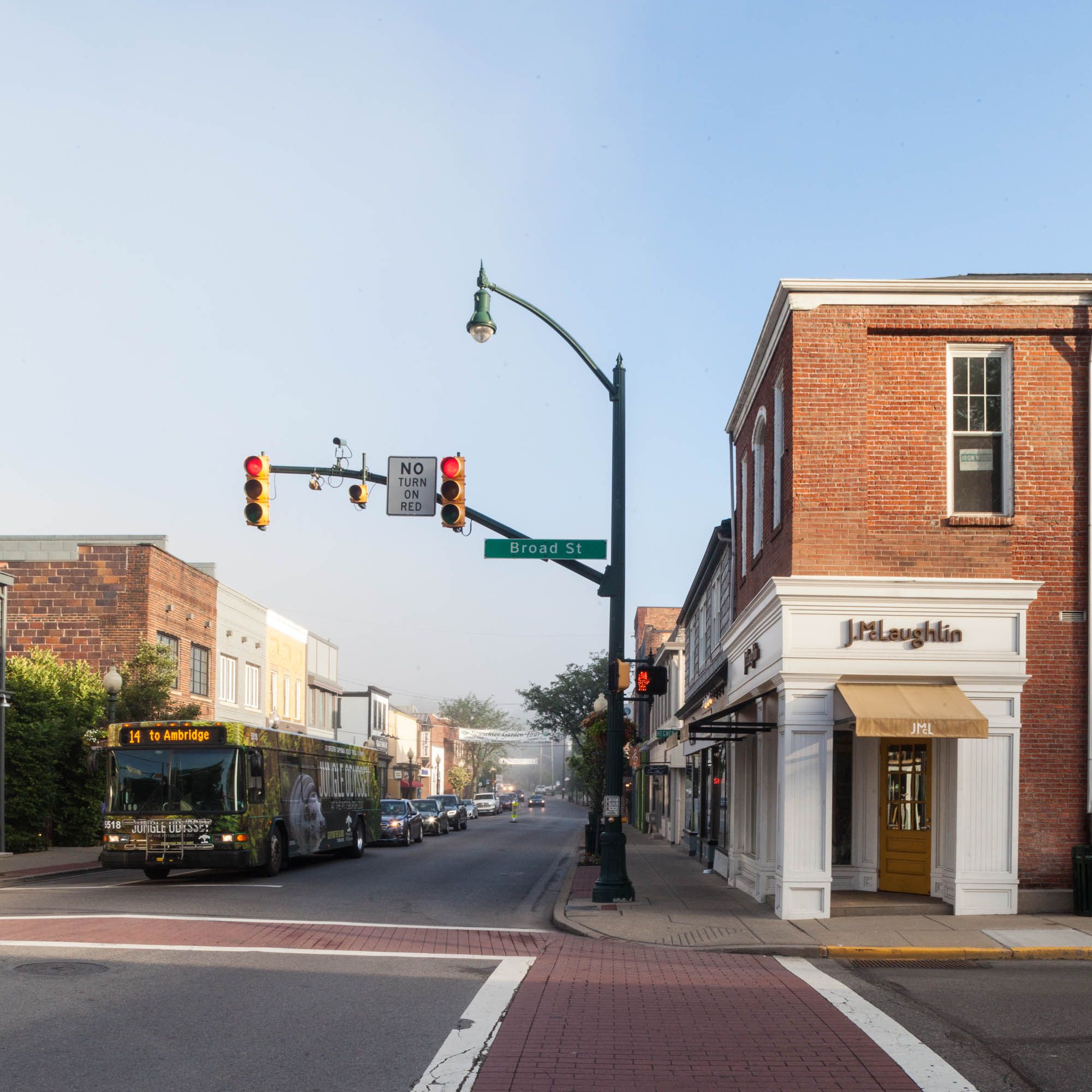
J.McLaughlin. Image courtesy of Studio St. Germain.
“SketchUp is great as a communication tool for our clients. SketchUp models work with many other programs, integrating into Revit, Lumion, and other tools we have. It folds into other programs nicely, becoming part of our workflow.”
When studying design and performance, we conceptualize objects three-dimensionally. Ben uses SketchUp to iterate and pull models together. We use these early 3D models internally for performance assessments and externally for visualization to communicate the design effectively to owners, clients, and developers. Most of our clients want to see concepts three-dimensionally, not just in flat 2D. Many clients often have difficulty translating a flat elevation or floor plan into three dimensions.
Wilkinsburg Passive House. Image courtesy of Studio St.Germain.

Ben:
“Another reason we like SketchUp is how quickly you can get presentable results. You can start by knowing very little about the design and get to a model that we can present to people in a short time. We love the iterative speed at which we can create a design vision.”
SketchUp is a communication tool first. How we use other programs around it fits our philosophy of evidence-based design. We needed a tool to iterate models and evaluate design performance early on. We looked at many different sustainability and pre-design software options before landing on Sefaira.
Wilkinsburg Passive House High-Performance Design. Image courtesy of Studio St.Germain.

Sefaira is a beneficial design and communication tool for making decisions around sustainability. We can have deeper and more intelligent conversations with owners about how changes to the building will affect its performance.
The studio has a high-performance program for clients that are interested in sustainability. We help them understand their options and how sustainability relates to economics and building performance.
How do you ensure the building maintains an aesthetic charm without compromising its sustainability goals?
Nathan:It's a symbiotic relationship. We ask, “ What is the best approach?” and whatever direction we take, we collaborate with our team of engineers to understand the design structurally.This balanced ethos is baked into the firm's culture, and each project follows that workflow.
“If our philosophy is the art of architecture and performance, we must execute both.”
Some of the challenges we have are that contractors may not be familiar with the specified sustainable systems. We have to communicate clearly to the contractor and subcontractors what we envision. When pushing the envelope, you don’t just need to educate the owners; you need to educate the trade professionals putting the building together. They will ask 'why' questions if it’s a system they are unfamiliar with. We carefully communicate the sustainable strategies and their importance to the client’s goals.
Sewickley Tavern. Image courtesy of Studio St.Germain.

What extension can you not live without?
Nathan:SketchUp is always the base modeling program. We render in Lumion, but sometimes we create graphics directly from SketchUp using the Style Builder feature. We lean on the Sefaira plugin and web app for building performance analysis. Depending on other requirements, we use SketchUp for exporting line drawings to interface with AutoCAD or other programs.
What is the core philosophy of the studio?
Nathan:Our core philosophies are a part of the company culture and tie back to the mission. One of them is the idea of the purpose beyond the project. We are building to give back. We do this in different ways, including giving back to the environment with sustainable initiatives and the community by providing healthier indoor environments.
We spend 90% of our time indoors, so nothing affects our bodies and minds more. I'm 46 years old; if you do the math of 90% on that, it's 39 years inside of a building!
We feel responsible as a firm and as individuals. We use available health and building science to create healthy environments. Building science development has helped innovative companies use programs like Sefaira to track the as-built performance of specified HVAC systems against monitored indoor air quality. We believe you can't improve what you don't measure.
Having accurate technology helps us measure and then improve existing conditions. We can monitor indoor air quality and how it's tied to the HVAC system for demand control valuation to meet the goals we've set early on in the project. We have post-occupancy conversations to show clients the building is performing well, or if there's an issue, we know how to address it quickly.
“We are stewards of the art of architecture; we pay attention to the aesthetic of architecture because it's a symbiotic relationship.”
We want the space for the occupants to be beautiful, function well, have excellent light, and perform well. You can have it all; it's not one or the other.
Another significant component in what we do is around the idea of move vs. wow. You can say this is a high-performance building doing X, Y, and Z, and people often say, wow, that's impressive, but our goal is to evoke an emotional response, which is much harder to do.
The point is to connect emotionally to elicit an action from someone. They could then tell a colleague about the benefits of sustainability or invest in an indoor air quality monitor for their home.
We want our clients — regardless of where they are on the sustainability curve (early learners or sophisticated decision-makers) — to take the next step toward a greener future. It's about educating people so they can feel empowered; that's the heart of the design process.
Check out the articles below to learn more about sustainable design workflows:
Learn more about Sefaira here. Try SketchUp for free here.
About Studio St. Germain
Studio St. Germain is an award-winning, full-service architecture firm specializing in human-centric design – architecture that puts people at its heart. Studio St. Germain’s staff is passionate about portraying architecture as a public good and adhering to a humanistic philosophy where community values are an integral part of the design process and reflect their core belief: building to give back.